
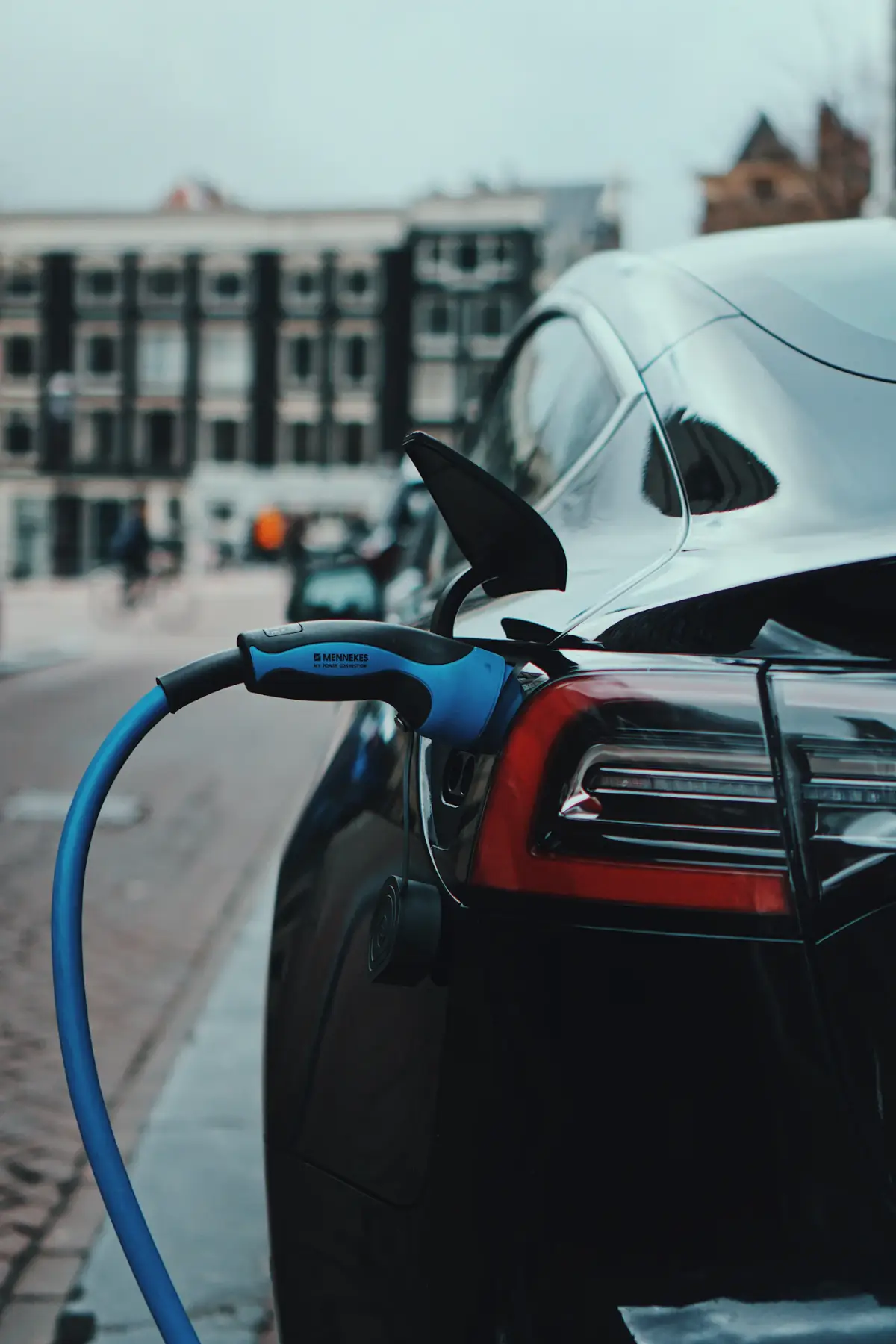
Key facts at a glance
- 17M+Electric cars sold worldwide in 2024, over 20% of new car sales
- 20M+Electric car sales expected in 2025, more than one in four cars
- 42 GWBattery storage added to power systems in 2023, up more than 130%
- 1,200 GWBattery storage needed by 2030 to triple renewables (IEA)
- 90%+Fall in battery costs in less than 15 years
Two technologies are changing how electricity is used and managed: electric vehicles and battery energy storage. Both rely on lithium-ion batteries, both are growing quickly, and both have direct consequences for anyone who owns or operates electrical infrastructure.
Electric vehicles are going mainstream
The International Energy Agency's Global EV Outlook 2025 reports that global electric car sales exceeded 17 million in 2024, more than 20% of all new cars sold. China accounted for over 11 million of them, with electric cars making up almost half of its car sales. The IEA expected global sales to exceed 20 million in 2025, more than one in four new cars worldwide.
The IEA also notes that public charging stations have doubled over the past two years. Even so, charging remains a constraint in many markets, especially for fleets, apartment dwellers and long-distance travel.
Battery storage is scaling even faster
In its 2024 analysis Batteries and Secure Energy Transitions, the IEA found that battery deployment in the power sector increased by more than 130% in 2023, adding 42 GW. Battery costs have fallen by more than 90% in less than 15 years. To meet the COP28 goal of tripling renewable capacity by 2030, the IEA estimates the world needs 1,500 GW of energy storage, of which 1,200 GW would come from batteries.
What this means for infrastructure owners
- Distribution networks will feel the load first. Fleet depots, bus terminals and commercial charging hubs can add megawatts of demand at a single location. Grid impact studies should come before charger orders.
- Smart charging is essential. Load management, open protocols such as OCPP and, in time, ISO 15118 vehicle-to-grid communication allow charging to follow tariffs and network capacity.
- Storage changes the economics. Batteries can shave peak demand charges, firm solar output, provide backup power and support charging sites where grid capacity is limited.
- Safety must be engineered in. Standards such as IEC 62933, UL 9540 and NFPA 855 guide the design, siting and fire protection of storage systems.
- Cybersecurity is now a grid issue. Connected chargers, inverters and battery controllers must be secured like any other operational technology.
A planning checklist
- Profile current and future loads, including vehicle electrification plans.
- Assess transformer, cable and switchgear capacity at each site.
- Compare grid upgrades with on-site storage and solar options.
- Choose open, interoperable charging and energy management platforms.
- Plan operations, maintenance and cybersecurity from day one.
How Optimity Global helps
Our Energy, Power & Electrical Infrastructure practice delivers grid impact studies, EV charging infrastructure, battery energy storage systems, substations and critical power, together with cybersecurity for power and energy systems. We help clients electrify with confidence.
Sources
- IEA, Global EV Outlook 2025: Executive summary
- IEA news: More than 1 in 4 cars sold worldwide this year is set to be electric
- IEA news: Rapid expansion of batteries will be crucial to meet climate and energy security goals set at COP28
Figures are quoted from the sources listed as published at the time of writing. Please refer to the original publications for full context and any later updates.